
“The art challenges technology, technology inspires the art.” – The Pixar Story
Last week, I wrote about satire as an important tool for thinking about things others may not think of, both the good and the bad. This week, I want to build on something I briefly touched on:
While some things that The Simpsons supposedly predicted are now commonplace (such as autocorrect and smart watches), or have inspired real criminal activity (e.g., ferrets shaved to look like toy poodles or staff stealing grease from restaurants to sell), those activities are more closely linked to the influence pop culture and satire have on the world versus predicting something so seemingly absurd that it could never become reality.
A few years ago, when Samsung was announcing the release of their own smart watch, they released an ad showing the evolution of this idea, from Dick Tracy to the Jetsons to Power Rangers[1]. Finally, in the 2010s, we had this technology that was originally conceived in the 1940s by Dick Tracy comic creator Chester Gould[2], with variations throughout history as we worked to create the technology that would become the mini-computer on the arm instead of a mini-phone[3]. Essentially, the art inspired the technology, which can be seen in other inventions, such as cellphones (inspired by Star Trek[4]), the defibrillator (inspired by Mary Shelley’s Frankenstein[5]), and even the helpful yet infuriating autocorrect (inspired by The Simpsons[6]). Autocorrect was intended as a gag in the satirical cartoon, lampooning the precursor to the iPhone (known as the Newton) and its shoddy handwriting recognition, with Dolph’s memo of “Beat up Martin” hilariously becoming “Eat up Martha.” The Apple engineers tasked with working on autocorrect and the iPhone keyboard reportedly would say “Eat up Martha” to encourage themselves to eliminate those kinds of egregious errors. Fortunately for us, autocorrect is still perfectly imperfect, spawning an assortment of hysterical memes[7].
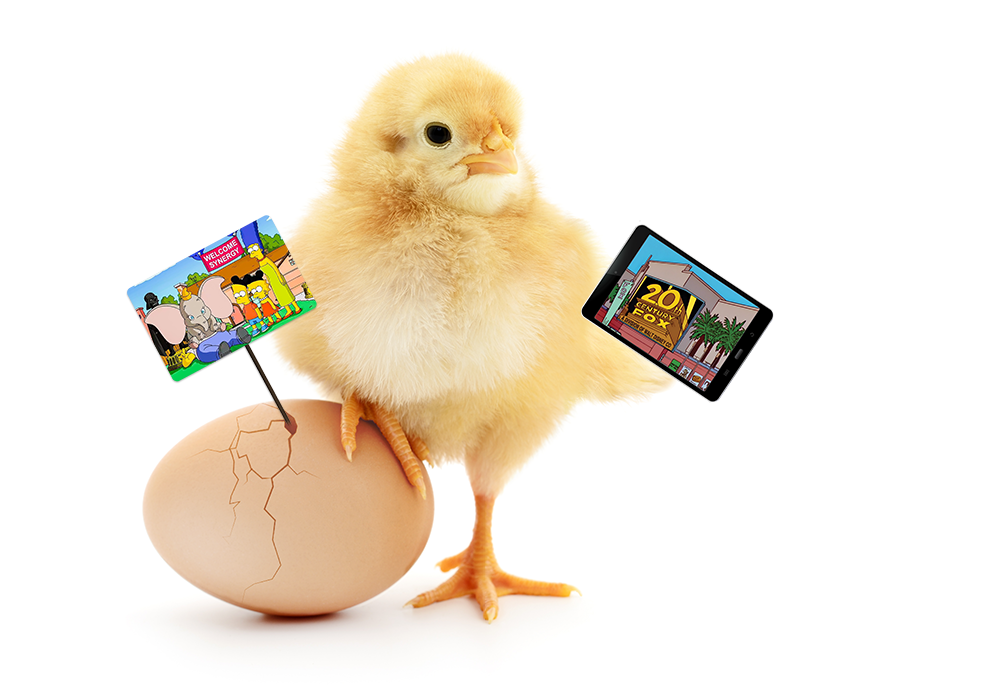
Many more examples of how art has inspired technology exist, but what is really important for futurists and creators alike is to understand how this has become somewhat of a “chicken and egg” scenario: Does the idea come first from the art, or were we already heading that way? How much does the art inspire our actions and inventions?
In a post I wrote for The Futures School in 2020[8], I alluded to this sense of the attitude toward the future in a post I wrote for The Futures School in 20208. As I started writing the post, I knew I needed to find examples of post-apocalyptic fiction – and I was not disappointed. In fact, the hardest part was limiting the examples to just three. And while these series are fairly popular, I can’t help but feel that the bleakness of these series has contributed significantly to the attitude of the general population to the future: that it’s bleak, that we have no hope, that we will all die.
One example of this is from a true crime show I was watching at the time called Unusual Suspects, where investigators were puzzled about this purple goop they found all over the victim’s apartment. It turns out that the murderer was using PVC glue to cover any surface he thought he may have touched, as PVC glue melts the surface it touches, rendering fingerprints unable to be obtained – and, he admitted, he learned this from the television show CSI.
Now, I’m not saying that everyone’s going to go out and kill people based on what they see in true crime shows and murder mysteries[9]. And I’m certainly not saying that creators need to curb what they’re creating because it could be dangerous[10]. But what I am advocating is that futurists, strategists, and decision-makers take a good look at what is gaining traction in the Social area of the STEEP framework[11], as that is a better indicator of what people are thinking, feeling, and wanting versus trying to tell them with fancy gadgets and platforms[12].
Creators have more power in the world than many people in business give them credit for. Personally, I’ve been in situations where I would bring up something I saw in a movie or television show, or read in a book, and have been dismissed because “it’s just fiction.” Jules Verne may have written fiction, but he contributed more to technological advancement than any supervisor I’ve had. Fiction writers create things to solve problems, just as inventors do. Whether the technology is inspired by the art or the art is enhanced by technological advancement is neither here nor there. But the important part is that creation, in its purest form, creates innovation. Innovation, to that point, is not simply an iPhone upgrade or a new social media platform, but anything that creates change[13] in the population, whether a community or a country.
Back to the chicken and egg question I prompted earlier: what comes first, the art, or the idea that can be traced to it? Unlike the chicken-and-egg argument[14], there isn’t a clear answer, because there doesn’t need to be one. Instead, the art and the change should continue to be linked. Multidisciplinary thought is the answer for change – have your engineers, your strategists, your futurists, and your writers in the room when discussing decisions and what the future holds. Have the people who only know of how robots function from Short Circuit and Futurama ask questions of the engineers. Have strategists watch episodes of The Walking Dead to understand why people feel that they are doomed. Include artists in the discussion. We may not always create it first, but we can push its uses out to extreme levels. And that’s worth the inclusion.
[1] https://www.youtube.com/watch?v=azouIjsZrds
[2] https://historydaily.org/was-dick-tracey-the-character-who-invented-the-smart-watch
[3] https://www.bloomberg.com/news/articles/2018-01-08/a-concise-history-of-the-smartwatch
[4] https://www.smithsonianmag.com/science-nature/ten-inventions-inspired-by-science-fiction-128080674/?page=7
[5] And, well, she also invented the genre of science fiction. So more props to Mary.
[6] https://www.cnet.com/news/the-simpsons-eat-up-martha-was-the-first-autocorrect-fail/
[7] Including the turning of a certain four-letter-word into “duck” almost every time.
[8] https://thefuturesschool.com/blog/foresight-in-the-garden-of-good-and-evil/
[9] Though if there is a Jessica Fletcher in your town, I suggest you run. She apparently brings death with her on holiday.
[10] ‘Cause there goes my writing career.
[11] Societal, Technological, Environmental, Economical, and Political
[12] Quibi, anyone?
[13] Neutrally speaking.
[14] I’ll leave that to scientists – I’m too busy writing.
 formthefuture.org