
“A wise person decides slowly but abides by these decisions.” – Arthur Ashe
Oh, Colonial Pipeline. You never cease to bring enjoyment into my futurist soul, thanks to the articles that keep coming out about you.
On May 24th, MIT Technology Review[1] released an article about the Colonial Pipeline hack by hacking group DarkSide. The article mentioned that antivirus company Bitdefender had found a flaw in DarkSide’s ransomware program, and published to the whole world that they had a free tool that would decrypt DarkSide’s program, essentially enabling other companies to protect themselves from a DarkSide attack. The only problem is when you publish something publicly, the very entity you’re writing about is certain to read it too.
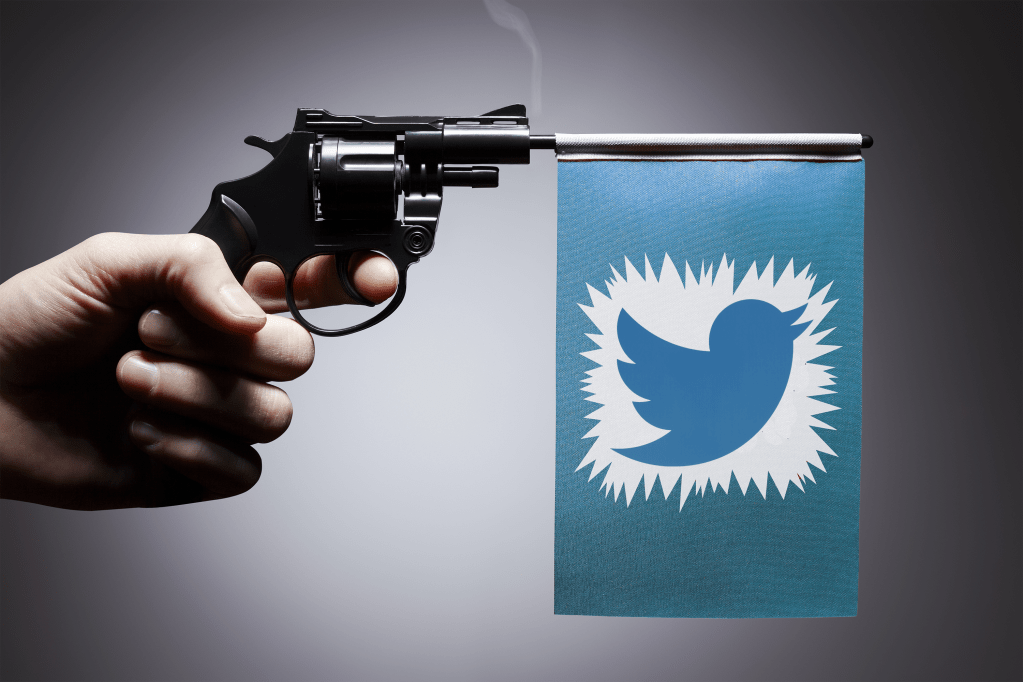
Now I don’t doubt that Bitdefender had good intentions, but you know what they say about good intentions. When you’re thanked in a tweet by the people you’re fighting against, you may have done something…what’s the word? Oh, right, ridiculous[2].
One thing that has mysteriously eroded in the advent of new, people-sourced technology is the concept of silence. We live in an increasingly noisy world, with the noise of information overload[3], social media overload[4], and just general noise of the world around us[5]. Silence has gone the way of the dodo and the concept of the “great American novel” – they once existed, but have now vanished into the ether. Silence also ties in with the abilities of observance and critical thinking, as well as the old adage to think before speaking.
We meet our technological advances with a high degree of enthusiasm, as though we’re afraid to question advancements for fear of being seen as a “fuddy-duddy” or “square[6].” We combat our fear of change by overly embracing change, like jumping off a cliff to impress others when we’re afraid of heights[7]. But more often than not, this does not work out in our favor, and we end up hurting ourselves either physically[8], mentally, or reputationally.
One example can be seen with the use of social media – in this case, Twitter. The public is enamored with the idea of being able to share our innermost thoughts with the rest of the world. Sometimes, however, we should just think things instead of stating them on a public forum that is eventually saved in the Library of Congress for eternity[9]. At one job I had, we actually dismissed a candidate who posted a healthy stream of derogatory statements regarding a variety of groups of people on their Twitter account, as we didn’t want someone working with us that would bring about a toxic environment. Some would argue that a person’s Twitter account is private and shouldn’t be used against them. Others would argue that once it’s out there, anything you say can and will be used against you.
This is the type of misunderstanding that should make us realize that we tend to implement first and then work out the kinks later. We allow the noise of everything to almost paralyze our critical thinking skills, because silence is a commodity in short supply. In this increasingly digital age, this way of thinking is going to cause more problems than it will solve. A runner knows they have to break in a new pair of shoes with training before wearing them at the big race. We should have that same mentality with anything we implement, whether it’s a new infrastructure, a new social media platform, or even just a new type of pen[10].
There are many reasons why this behavior is so prevalent, such as altruistic reasons, competitive reasons, or even just “keeping up with the Joneses” reasons. Bitdefender, for example, more than likely had altruistic and competitive reasons: They wanted to help protect people from DarkSide, but they also wanted to promote themselves as a premiere cybersecurity firm (which they already were, but in this day and age of attention spans running shorter than a parsec, we apparently needed a reminder)[11]. However, the lessons we learned from historical events, like World War II, on “loose lips sinking ships” and “her careless talk cost lives[12]” seem to have disappeared due to the prevalence of the internet and this fallacy that the internet is private. Because it’s not. No, really. It’s not private. If my father, who has no Facebook account to speak of, can hack his way into my Facebook feed to ask me why I haven’t called home and that’s a lovely profile picture and that’s not sarcasm, then I’m pretty sure that busts a hole the size of Texas into the idea that the internet is private.
Yes, we should try to keep the pace of advancement running as it is, but not at the cost of continuously taking one step forward and eight steps back. We need to test everything. We need to think through everything. This may involve risk management, this may involve strategic planning, or it may just involve someone simply taking a beat to say, “Should I post this publicly? Do people really care about how I feel about (insert random celebrity here)?” Ask your questions first, before implementation. Do yourself a favor, even if it’s just for the sake of your kids’ not finding pictures of you doing a keg stand at your first frat party[13] or worse[14].
Oh, and to reiterate once again about how the internet is not private: if you’re going to post death threats on a public forum for a government agency, you do realize that the government has people that can find you and make sure your threat is neutralized, right? Another good reason to think before you post. Because I’ve seen this. And I continue to see this. And I can’t help but feel humanity may be doomed if people continue to think this kind of thing is okay.
So remember folks, ask questions first, implement a bit down the road. Your future, and not your hackers, will thank you.
[1] https://www.technologyreview.com/2021/05/24/1025195/colonial-pipeline-ransomware-bitdefender?truid=e0cbe9149ee6fb67c7731775e8f4942a&utm_source=the_download&utm_medium=email&utm_campaign=the_download.unpaid.engagement&utm_term=&utm_content=05-27-2021&mc_cid=735c04e73d&mc_eid=3e281958c7
[2] See also absurd, daft, and stupid.
[3] We’ve all been down those Wikipedia rabbit holes.
[4] I really don’t care about your lunches anymore. But keep the kitten and puppy pictures coming!
[5] Someone’s car alarm keeps going off EVERY. SINGLE. NIGHT.
[6] I’d like to thank my parents for the old-timey words of their parents’ generation.
[7] This may or may not be based on a true story.
[8] Again, may or may not be based on a true story.
[9] Hyperbolic or real? You decide. I’m looking at you, Library of Congress.
[10] As a writer, the right pen makes all the difference. Trust me.
[11] This Twitter snafu was not that reminder.
[12] https://www.archives.gov/exhibits/powers-of-persuasion
[13] Kind of kills the argument of “You need to wait to be of legal age to drink.” Hypocrisy and all that, you know.
[14] Bad, bad facial hair. *shudder*
 formthefuture.org